
Fintech platform
BillHub is a recharge and BBPS bill payment app built end to end by Pen Programmer, with 5M+ downloads and a 4.4★ rating on Google Play. We designed and built the web app, Android and iOS apps, the backend and the admin panel.
- Client
- Shahrukh Abedin
- Industry
- Fintech
- Type
- Fintech platform
- Year
- 2023
- Platforms
- Android, iOS, Web
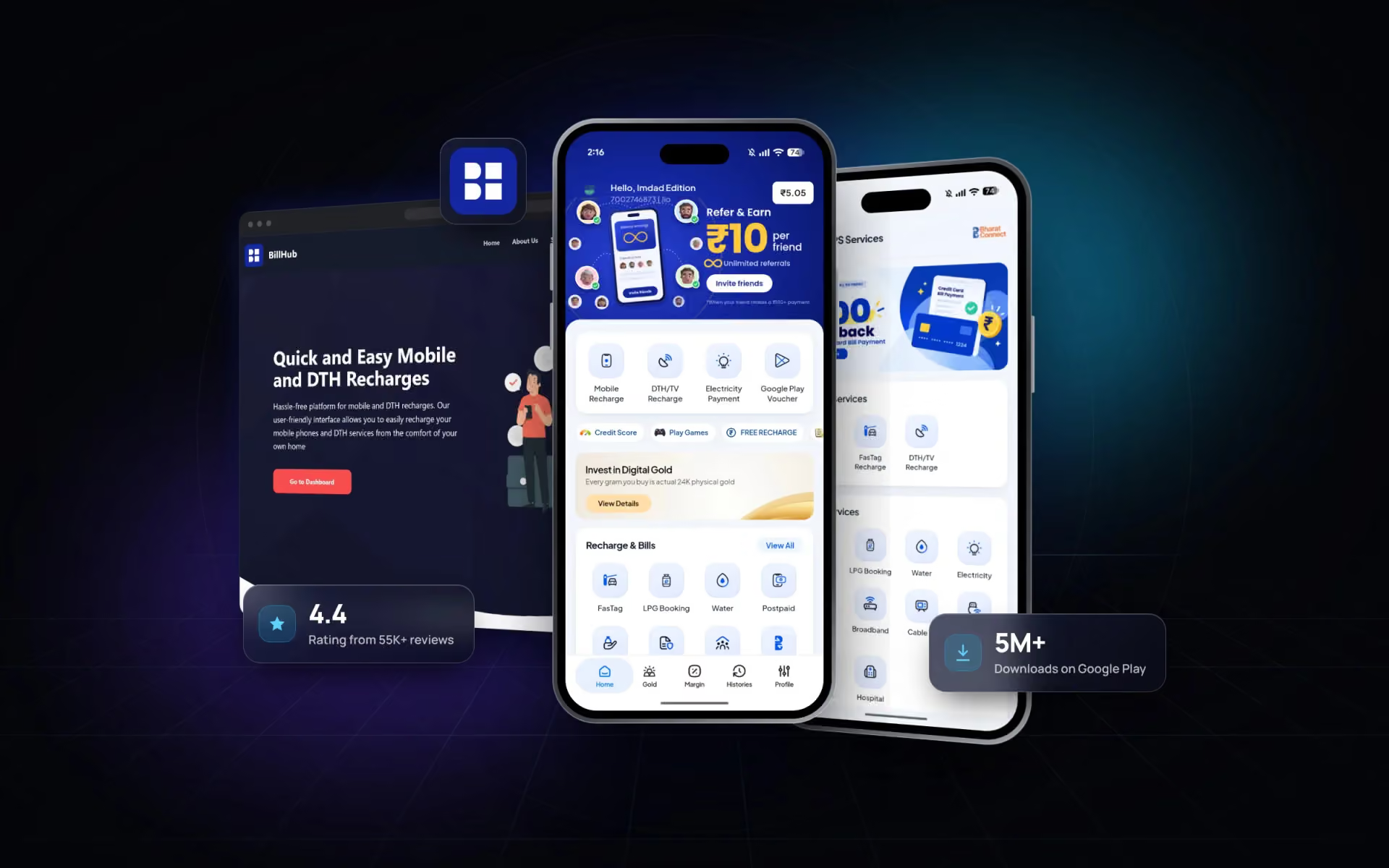
5M+
Google Play downloads
4.4★
Play Store rating
55K+
User reviews
Background
Mobile recharge and bill payments are an everyday need in India. Yet many people still switch between different apps to get them done.
BillHub wanted to bring it all into one simple, fast app that anyone can use, including first-time digital payment users in smaller towns. Pen Programmer came in as the technology partner to build the product from the ground up.
The problem
A recharge looks simple, but a lot happens behind one tap. Money moves through several systems, and any of them can be slow or fail.
- Trust: users expect their money to move instantly and correctly, every time.
- Many services: mobile operators, DTH providers and billers all work differently.
- Security: a wallet app needs strong protection for users and their money.
- Growth: the platform had to stay fast as users grew into the millions.
"In payments, users remember the one transaction that failed, not the hundred that worked."
Objectives & constraints
- One app for mobile recharge, DTH and bill payments.
- Instant confirmation for every transaction, and automatic refunds if something fails.
- A platform that keeps working even if one service provider has issues.
- An admin panel that gives the BillHub team full control.
- A small team, so the system had to be easy to maintain.
- Cost-efficient hosting that could still handle heavy traffic.
- Strict rules for payments and BBPS compliance.
- Many users on budget phones and slow mobile data.
Research & strategy
We studied how people actually recharge. Most payments are small, frequent and urgent, so speed and trust mattered more than adding lots of features.
Our strategy:
- Build a reliable core first, then add growth features on top.
- Use more than one provider for recharges and payments, so one outage never stops the app.
- Use BBPS for bill payments, giving users access to a wide range of billers.
- Let data guide decisions, with clear analytics and reports for the team.
Design approach
One rule guided every screen: a user should finish a recharge in a few taps.
- Simple home screen: recharge, DTH and bill payment come first.
- Helpful suggestions: the app shows better-value plans before checkout.
- Clear status: every payment shows success, pending or failed.
- Quick sign-in: login with Google or OTP.
- Light and fast: screens load quickly, even on budget phones and slow networks.
- Same experience everywhere: web, Android and iOS share the same flows.
Key features and journeys
Mobile recharge
Prepaid and postpaid recharge for all major operators
DTH recharge
Quick recharge for all major DTH providers
Bill payments
Electricity and other bills through BBPS
Electricity and other bills through BBPS
Add money, pay in one tap, get instant refunds on failure
Smart plans
Better-value plan suggestions before payment
Vouchers
Over 500+ Brands voucher at discounted price
Technical architecture
BillHub is built in three simple layers: apps for users, a backend that handles every transaction, and services for recharges, bills and payments.
- Apps: a Next.js web app plus Android and iOS apps.
- Backend: PHP APIs that process transactions and retry when a service is slow.
- Database: MySQL, optimised to handle millions of transactions.
- Notifications: Firebase Cloud Messaging for Android and iOS.
- Monitoring: live success rates so the team can spot issues early.
- Next.js
- React Native
- PHP
- NodeJS
- MySQL
- Firebase
- Google Analytics
Challenges & decisions
1. Keeping the app fast at scale
As transactions grew into the millions, reports and dashboards started to slow down.
Decision: we optimised the database and moved dashboards to pre-calculated summaries. Reports now load in moments instead of scanning millions of records.
2. Handling slow or failed services
Recharge and payment services sometimes respond late or fail.
Decision: we added automatic retries and live monitoring for every service, so problems are caught before users notice them.
3. Getting refunds right
When a recharge fails, the user must get back exactly what they paid.
Decision: we built a dedicated refund system that returns money to the wallet automatically and accurately.
4. Reaching users reliably
The old notification service had user limits that didn't fit an app of this size.
Decision: we moved to Firebase Cloud Messaging, which removed the limits and gave us full control.
5. Keeping accounts safe
A wallet app needs strong security for both users and the admin team.
Decision: we added user verification, risk checks and two-step login for the admin panel.
Results
- 5M+ downloads on Google Play.
- 4.4★ rating from 55K+ reviews.
- Millions of transactions processed with automatic refunds on failure.
- A fast app that works well on budget phones and slow networks.
- Live monitoring that helps the team fix issues before users are affected.
Lessons learned
- Reliability is the product. In fintech, trust is everything.
- Never depend on one provider. Backups turn outages into small events.
- Plan for growth early. A database built for scale is cheaper than fixing one under load.
- Keep it simple. Fewer taps means more completed payments.
- Measure everything. Good data turns guesses into decisions.
"The best payment experience is one users never have to think about."
Next case study
Scordemy
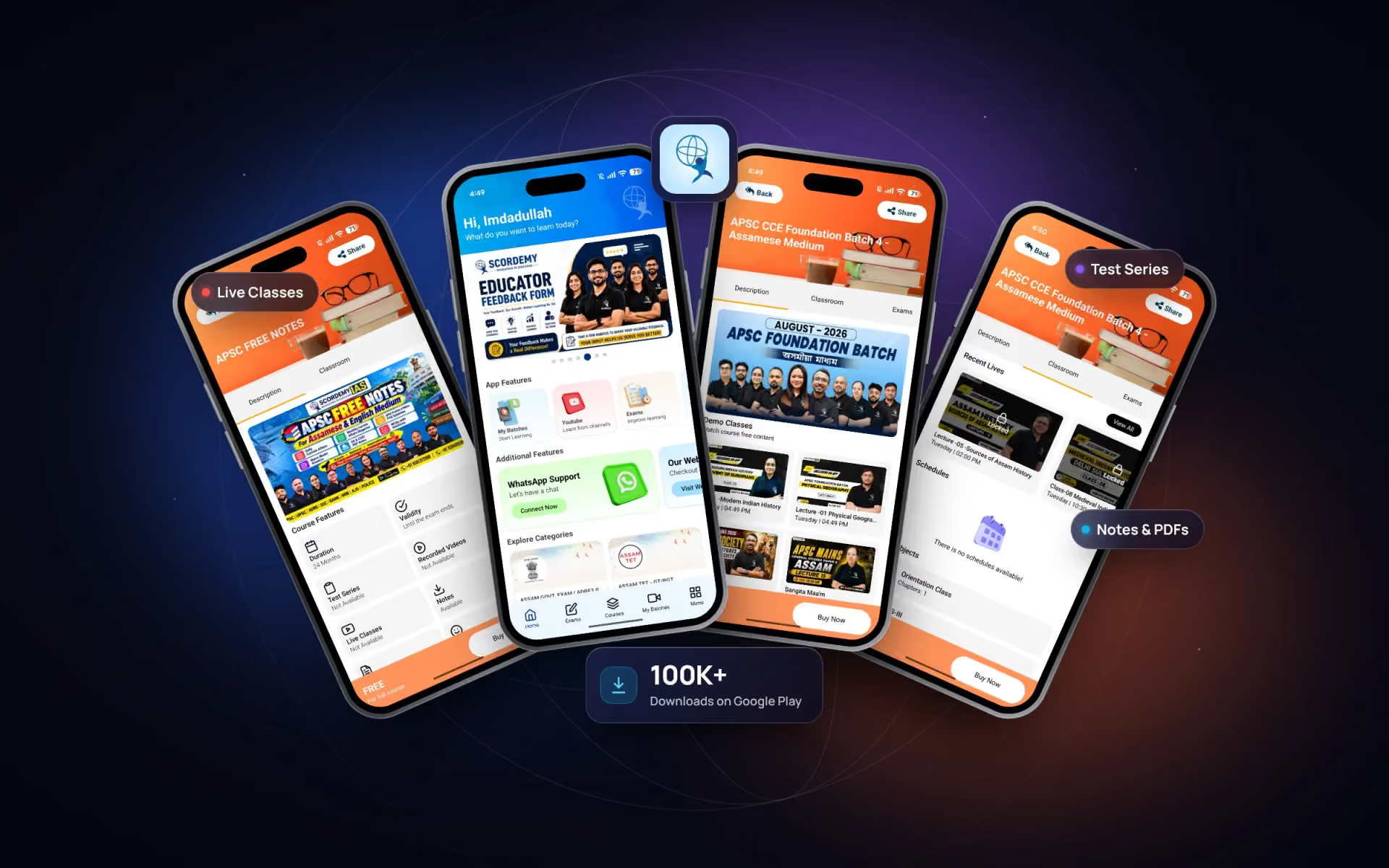
Scordemy is an edtech app from Assam for school and competitive exam prep in regional languages, with 100K+ downloads and 50K+ subscriptions. Pen Programmer built its apps, live classroom, test series and a secure video player that stops piracy.
Have a project like this?
Tell us what you're building. We'll get back to you with next steps.
